The “Caramelo Dog”: From the Streets to Cultural Pride in Brazil and Mexico
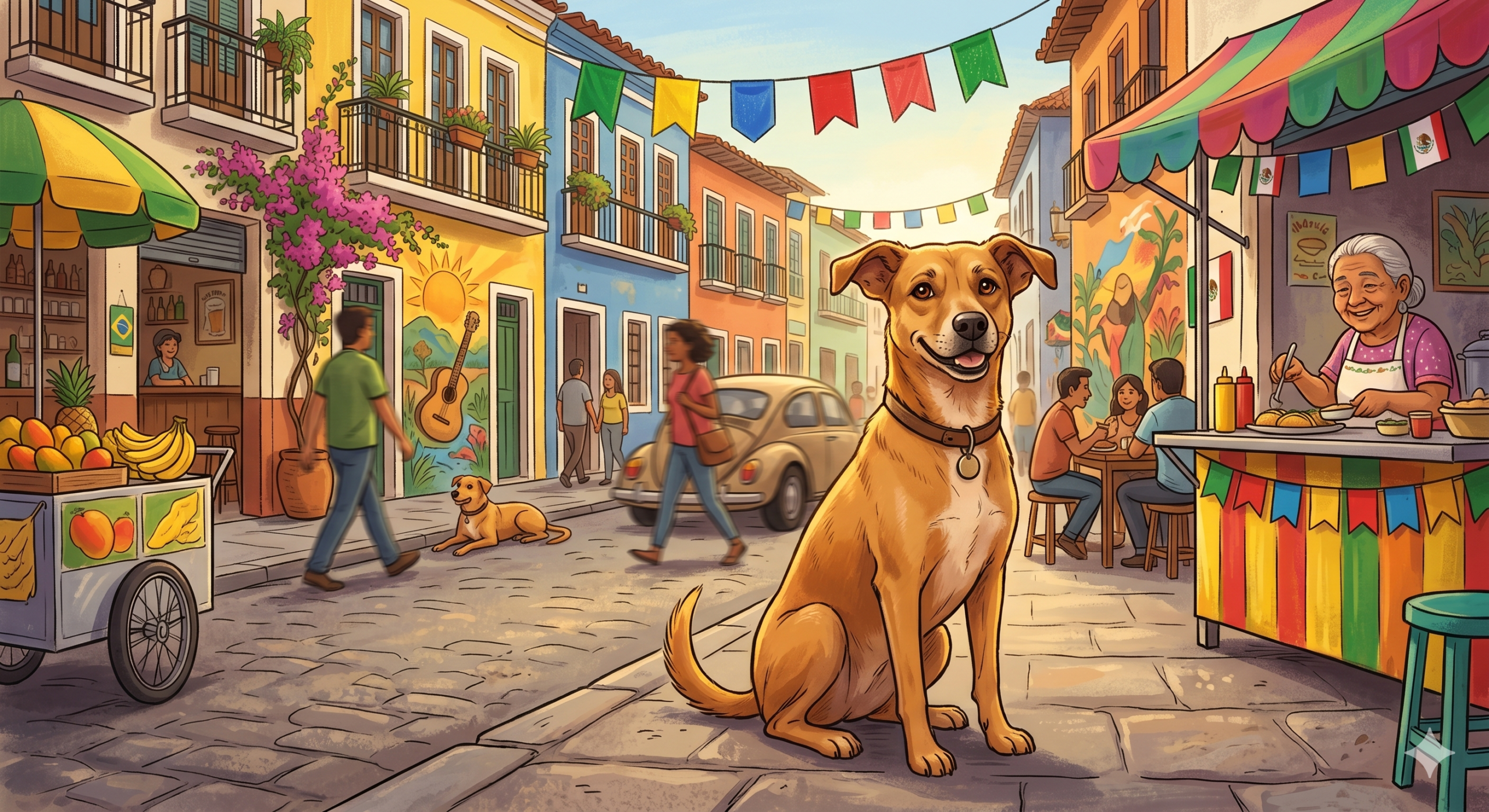
In Latin America, we are divided by languages, currencies, and even football, but there is one thing we all agree on: there is no neighborhood, corner, or gas station in the entire region without a honey-colored dog with attentive ears and wise eyes. This is the “Perrito Caramelo” (Caramel Dog), the true owner of public space from Tijuana to Patagonia.
What began as a viral phenomenon between 2018 and 2019 has escalated to a level of institutional recognition that blows our minds, creating an unexpected cultural bridge between Brazil and Mexico.
Brazil: The “Vira-lata” That Became Law
In Brazil, the “Vira-lata Caramelo” is an institution. The fever gained unprecedented media momentum in 2020 with the launch of the 200-real banknote. Although the official image was that of the maned wolf, the popular mobilization in favor of the “Caramelo” was so genuine that Brazilian monetary authorities publicly recognized the phenomenon, integrating it into their communication narrative to connect with citizens during the launch. In fact, the seed of this movement was planted years earlier, when a petition with over 50,000 signatures suggested replacing the macaw on the 10-real note with this street icon.
But it didn’t just stay on screens. While the Brazilian Congress is still debating Federal Bill 1897/23 to grant it national status, the State of São Paulo took the lead. In January 2026, Law 18.389 was sanctioned, officially recognizing the Vira-lata Caramelo as a cultural expression of the state. It is an act of historical justice: elevating the mixed-breed dog—the one nobody “bought”—to the status of heritage, acknowledging that our identity lies not in “pure breeds,” but in mixture and resilience.
The Jump to the State of Mexico: The PROPAEM Pronouncement
As expected, this wave of mixed-breed pride crossed the Amazon. In Mexico, where we affectionately (and with plenty of wit) call them “color cartón” (cardboard-colored) dogs, the idea was quickly adopted. In the State of Mexico (Edomex), the Environmental Protection Agency (PROPAEM) issued institutional pronouncements to dignify these specimens, promoting their recognition as part of local identity.
These PROPAEM initiatives sought to transform the stigma of the stray dog into a symbol of protection and state pride. The response on social media generated one of the noblest interactions between the two countries:
- Brazilians posting photos of their “Caramelos.”
- Mexicans responding with their “Color Cartón” dogs from the streets of Toluca or Ecatepec, backed by the institutional echo of the Edomex authorities.
- A massive conversation that erased borders through photos of mixed-breed dogs wagging their tails.
Why Does This Matter to Webi.lat?
At Webi.lat, we analyze the movement of the region, and this phenomenon tells us a lot about the paradigm shift in LATAM:
- Dignification Over Status: For decades, owning a purebred dog was a symbol of colonial status. Celebrating the Caramelo is an act of cultural rebellion; it’s saying that what belongs to us—what was born on our streets—has more value than an imported pedigree.
- Animal Welfare with Identity: These campaigns encourage responsible adoption. By turning the mixed-breed dog into a “trend” endorsed by institutions like PROPAEM or the São Paulo legislature, people are incentivized to rescue rather than fuel the breeder market.
- Backyard Diplomacy: When people from the two giants of the region connect through something so genuine, it’s a form of organic diplomacy that strengthens cultural ties in a real way.
Webi’s Verdict
The Caramelo dog is the most honest inhabitant of Latin America. He doesn’t ask for papers, he doesn’t care about inflation, and he is always there. The fact that he is now officially recognized by state laws in Brazil and celebrated institutionally in Edomex is just confirmation of what we already knew: the Caramelo owns the neighborhood.
Sources for Further Research:
- São Paulo State Legislative Assembly (ALESP): Details on Law 18.389/2026 recognizing the vira-lata caramelo.
- PROPAEM (State of Mexico): Pronouncements and campaigns on the protection and dignification of companion animals.
- Central Bank of Brazil (BCB): Information on the history and launch of the 200-real note and its interaction with popular culture.
- Chamber of Deputies (Brazil): Tracking of Bill 1897/23 regarding national recognition.
Webi Tip: If you want a “national breed” specimen in your home, don’t spend a dime. Your city’s shelter is full of these ambassadors waiting for a home. Adopting is the most “Webi” act you can do for the region.
Leave a Reply