Tulio Triviño Conquers the Zocalo: Why 31 Minutes is the Greatest Legacy of Public TV
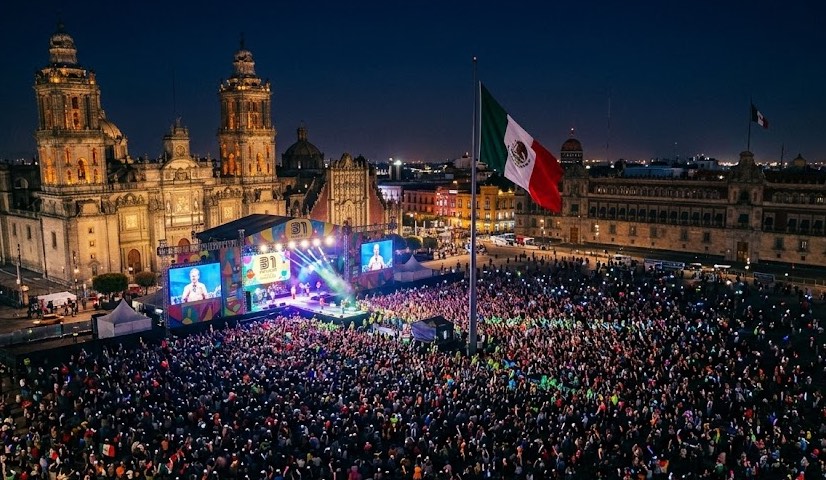
If someone had told you twenty years ago that a news show hosted by Chilean puppets would fill the most important plaza in Latin America with more than 230,000 people, you probably wouldn’t have believed them. But it happened. The recent success of 31 Minutes at the Zocalo in Mexico City is not just a phenomenon of nostalgia; it is proof that when public television dares to be intelligent, the results are massive.
At Webi.lat, we celebrate milestones that truly contribute to the region, and what Tulio, Bodoque, and company have achieved is, deep down, a political and cultural victory.
From Chilean Public TV to the World
31 Minutes was not born in a marketing office of a large private corporation. It was born in the halls of Televisión Nacional de Chile (TVN), thanks to public funds from the National Television Council. In an era where children’s television treated kids as passive consumers or beings who couldn’t understand reality, this show broke the mold.
Why did it work? Because it wasn’t afraid of children’s intelligence. Through absurd humor and deeply flawed characters—like an egocentric anchor or Juan Carlos Bodoque, a star journalist characterized by his cynicism and pessimism who carries constant gambling debts—the show began to sow something rare: the capacity for reflection and critique.
Mexico and Canal Once: A Strategic Alliance
The romance between Mexico and 31 Minutes has a key intermediary: Canal Once (Once TV México), colloquially known as Canal 11. Mexican public television was the bridge that allowed these Chilean stories to land in the country between 2005 and 2006, reaching the homes of millions of children who, now as adults, filled the Zocalo.
This phenomenon underscores the importance of public media. A commercial network would have hardly bet on a program that criticizes consumerism, talks about depression, or denounces the destruction of nature so acidly. Public TV allows for those spaces of experimentation that end up becoming pillars of regional identity.
A Cultural Bridge Across the Continent
At Webi, we are fascinated by the bridges that unite Latin America, and this case is a gem. The connection between Chile and Mexico is deep and old, but seeing it materialized on a stage where thousands of people chant songs about personal hygiene or children’s rights is mind-blowing.
This exchange is not just transactional; it is a solid cultural bridge. Although public television was its primary home in Mexico, its run on Nickelodeon Latin America between 2004 and 2007 further amplified its regional reach, cementing its cult status from Mexico to Argentina. It is the brotherhood of “making people think” over “making them buy.”
Puppets That Teach How to Think
What we saw in the Zocalo wasn’t just people singing “Mi equilibrio espiritual.” It was a generation that grew up understanding that you can be funny and critical at the same time. 31 Minutes is, essentially, a parody of the media and power, and that resonates strongly in a region like ours, constantly crossed by misinformation.
The show offers:
- Critical Thinking: It teaches us to doubt what we see in the news and to question authority (especially if it’s as dim-witted as Tulio).
- Real Inclusion: Diverse characters with real problems, far from the perfect stereotypes of other latitudes.
- Education with Attitude: They don’t give you a boring moral lesson; they make you laugh while you realize the world has problems that we must solve together.
The Webi Verdict
What happened in Mexico is a reminder that we in Latin America need more public television with a budget and creative freedom. The success of 31 Minutes proves that the audience (children and adults) is hungry for content that respects their judgment. It is, without a doubt, the most lucid voice in Latin American television today.
For Further Research (Sources):
- Canal Once (Mexico): The official site of the broadcaster that aired the show in Mexico.
- TVN (Chile) – Historical Archive: Information on the origin of the show and its impact on Chilean public TV.
- Official 31 Minutes Site: Details on production, characters, and international tours.
- UNESCO – Media Literacy: Documents on the importance of critical content for children in public media.
Webi Fact: The impact of 31 Minutes has transcended the screen, reaching massive cultural spaces like the Guadalajara International Book Fair (FIL), where their presentations and talks on creativity have drawn crowds, reaffirming that its characters are icons of Latin American popular culture.
Leave a Reply